Key takeaways
- SEO, GEO, AEO, LLMO, AIO, SEvO, and GAIO all describe strategies for getting found online, but they target different search surfaces and use different optimization methods.
- GEO (Generative Engine Optimization) and LLMO (Large Language Model Optimization) describe nearly identical work: making content citable by AI systems like ChatGPT, Perplexity, and Gemini.
- 60% of Google searches now end without a click (Bain & Company), and AI Overviews reduce clicks to top-ranking pages by 58% (Ahrefs), making AI visibility strategies essential alongside traditional SEO.
- The terminology matters less than the underlying work: structured content, sourced statistics, author authority, and freshness are what get cited regardless of which acronym you use.
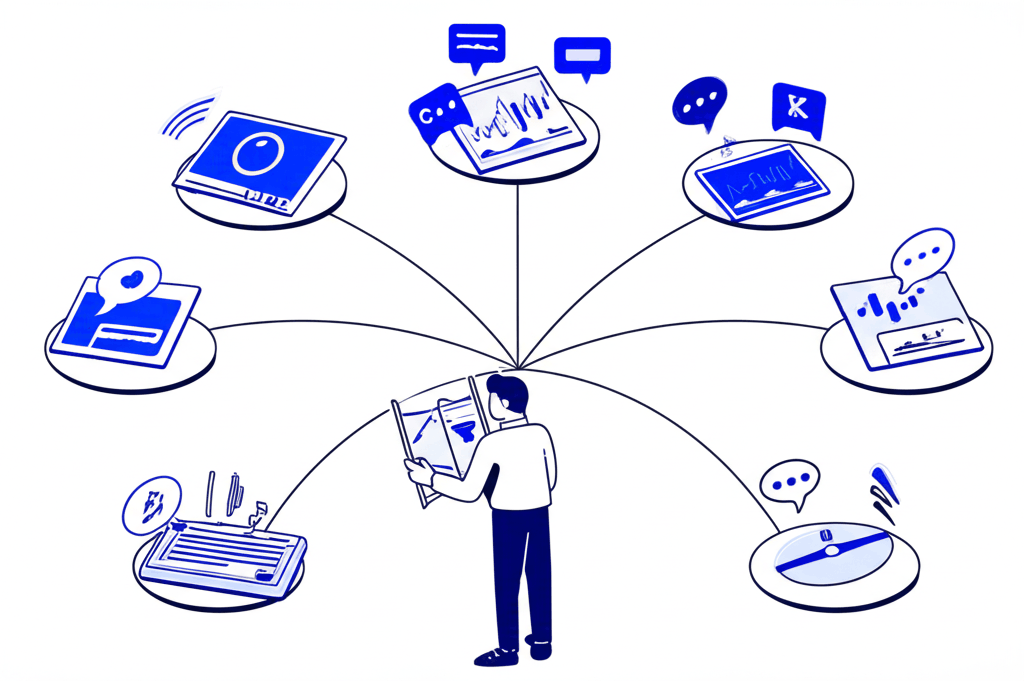
Seven acronyms now compete to describe how businesses get found in AI search results. SEO vs GEO vs AEO vs LLMO. The terminology has multiplied faster than most marketing teams can track. eMarketer reports that 54% of US marketers plan to implement GEO or LLMO strategies within three to six months, but many are still unclear on what each term actually means and whether they need separate strategies for each.
This guide defines all seven optimization terms, compares them side by side with data, and provides a decision framework for which approach fits your business. We built it because most terminology guides cover three or four acronyms and skip the rest — none of the top-ranking articles cover all seven. We also found that no competitor includes the platform-specific citation data that should inform which strategy you prioritize.
If you already know the basics and want the comparison table, skip to the side-by-side comparison. If you want to know which approach fits your situation, jump to the decision matrix.
The 7 optimization acronyms you need to know
Search optimization went from one acronym (SEO) to seven in under three years. AI search created new surfaces — AI Overviews, ChatGPT conversations, Perplexity answers — and different communities coined different terms for the work of appearing in them.
Here is every acronym at a glance. Each gets a full section below.
| Term | Full name | In one sentence |
|---|---|---|
| SEO | Search Engine Optimization | Rank higher in Google and Bing search results. |
| GEO | Generative Engine Optimization | Get cited in AI-generated answers (ChatGPT, Perplexity, AI Overviews). |
| AEO | Answer Engine Optimization | Appear as the direct answer in featured snippets and voice results. |
| LLMO | Large Language Model Optimization | Make content understandable and citable by large language models. |
| AIO | AI Optimization | Umbrella term for all AI visibility strategies. |
| SEvO | Search Everywhere Optimization | Optimize visibility across all platforms: Google, TikTok, YouTube, Amazon, Reddit, and AI. |
| GAIO | Generative AI Optimization | Near-synonym for GEO with minimal independent adoption. |
SEO: the foundation that still matters
Search Engine Optimization has been the standard for web visibility since the mid-1990s. SEO optimizes websites to rank higher in traditional search engine results pages: the ten blue links on Google, Bing, Yahoo, and DuckDuckGo. It covers technical SEO (crawlability, site speed, schema markup), on-page optimization (keywords, headings, content quality), and off-page signals (backlinks, domain authority).
SEO is not going away. Google still handles 8.5 billion searches per day, and BrightEdge data shows traditional search drives 99.7% of all discovery traffic. The key metrics remain rankings, organic traffic, and click-through rate.
What has changed is that SEO alone no longer guarantees visibility. Bain & Company found that 60% of searches now end without a click. Ahrefs reports that AI Overviews reduce clicks to the top-ranking page by 58%. If you rank number one but an AI summary answers the query first, your ranking delivers less value than it did a year ago. That is where GEO, AEO, and the rest enter the picture. For more detail, see our GEO vs SEO breakdown for 2026.
GEO: optimizing for AI-generated answers
Generative Engine Optimization is the practice of making your content citable by AI systems that generate answers: Google AI Overviews, ChatGPT, Perplexity, Gemini, and Copilot. The term was coined in a 2023 research paper by researchers at Princeton, Georgia Tech, Allen AI, and IIT Delhi, published at KDD 2024.
GEO differs from SEO in its objective. SEO asks “how do I rank in a list of links?” GEO asks “how do I get cited in a synthesized answer?” The Princeton study found that content with statistics, source citations, and quotations achieves 30-40% higher visibility in AI-generated responses. As a16z put it: “The foundation of the $80 billion+ SEO market just cracked.”
GEO is becoming the standard term for AI search optimization. The GEO market is valued at $848 million in 2025 and projected to reach $33.7 billion by 2034, a 50.5% compound annual growth rate. For a full overview, see our guide to what generative engine optimization is.
One branding issue: “GEO” also means geography, which creates confusion in some contexts. Despite that, industry momentum is behind this term.
AEO: the original answer optimization
Answer Engine Optimization predates GEO by several years. AEO emerged around 2014-2016 when Google began displaying featured snippets, knowledge panels, and People Also Ask boxes. Its original focus was capturing “Position Zero,” the answer box that appears above the organic results.
AEO targets direct-answer formats: featured snippets, voice search results (Alexa, Siri, Google Assistant), and knowledge panels. AIOSEO reports that 40.7% of voice search answers come from featured snippets, and the average voice search result is just 29 words. AEO content is short, direct, and structured to be extracted verbatim.
The line between AEO and GEO has blurred since AI-generated answers started replacing featured snippets. Some practitioners argue they are the same thing. Profound (itself a GEO tool vendor) argues that AEO and GEO describe identical work and prefers the AEO label because it avoids the geography confusion. Our take: AEO focuses on short, structured answers to specific questions, while GEO focuses on being cited within longer, synthesized AI narratives. For a detailed comparison, see our AEO vs GEO breakdown.
LLMO: the technical name for the same work
Large Language Model Optimization comes from the AI and engineering world rather than the marketing world. The concept was first described by Olaf Kopp at Aufgesang in 2021, and the term appeared in a Search Engine Land post in October 2023. LLMO focuses on making content machine-readable, semantically clear, and extractable by large language models.
In practice, LLMO and GEO describe the same optimization techniques with different framing. GEO comes from the search marketing perspective (how do we appear in AI search?). LLMO comes from the technical perspective (how do we structure content so LLMs can parse and cite it?). The work — structured headings, sourced statistics, schema markup, answer-first formatting — is identical. For the full technical guide, see our complete LLMO guide.
LLMO has a discoverability problem: searching for “LLMO” often returns results about building and fine-tuning LLM systems, not about content optimization. Google Trends shows lower search volume than GEO, though it has seen 5,000%+ breakout growth.
AIO, SEvO, and GAIO: the emerging terms
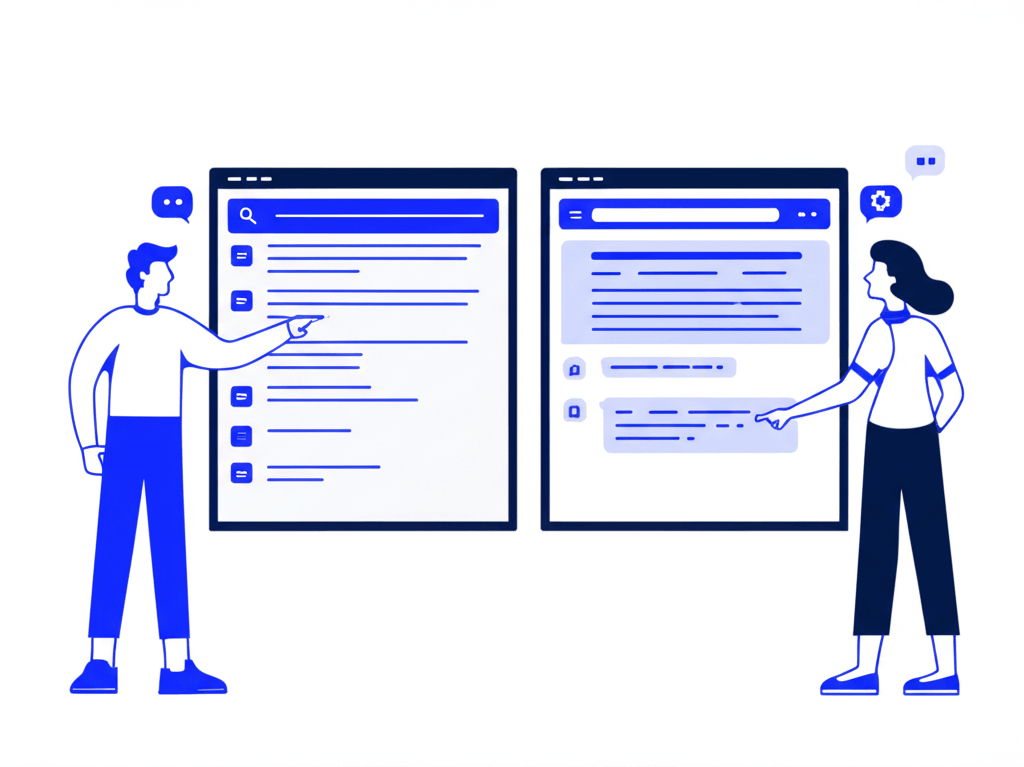
AIO (AI Optimization) is the broadest of the three. It is an umbrella for all optimization targeting AI-driven discovery: chatbots, AI search, voice assistants, recommendation engines, and AI Overviews. Some practitioners also use “AIO” to mean “AI Overview Optimization” (Google’s AI Overviews specifically), which creates ambiguity. Agencies that want a single term for the entire AI visibility category tend to favor AIO.
SEvO (Search Everywhere Optimization) takes the widest possible view. It argues that discovery now happens across Google, TikTok, YouTube, Amazon, Reddit, LinkedIn, app stores, and AI chatbots, and that brands need visibility on all of them. SEvO is less about the “how” of optimization and more about the “where.” It is growing in agency circles but remains niche. E-commerce brands with multi-platform discovery paths benefit most from this framing.
GAIO (Generative AI Optimization) is functionally identical to GEO. The pronunciation advantage (“guy-oh”) has not translated into meaningful adoption. You may encounter it in occasional blog posts, but it has minimal industry traction and no academic backing.
Side-by-side comparison
This table compares the six most relevant terms across the dimensions that matter for choosing a strategy. GAIO is excluded because it is functionally identical to GEO.
| Dimension | SEO | GEO | AEO | LLMO | AIO | SEvO |
|---|---|---|---|---|---|---|
| Primary goal | Rank in search results | Get cited in AI answers | Capture featured snippets | Be understood by LLMs | All AI visibility | Cross-platform visibility |
| Target platforms | Google, Bing | AI Overviews, Perplexity, ChatGPT | Featured snippets, voice | ChatGPT, Claude, Gemini | All AI systems | Google + social + AI + marketplaces |
| Key metric | Rankings, organic traffic | Citation rate, brand mentions | Snippet capture rate | Citation accuracy | Share of AI voice | Multi-platform visibility |
| Content focus | Keywords, backlinks, technical | Stats, sources, structure | Short direct answers, Q&A | Semantic clarity, schema | Broad AI readiness | Platform-specific formats |
| Industry adoption | Universal | High and growing | Established | Niche/technical | Emerging | Emerging |
| Overlaps with | All (foundation) | LLMO, AEO, AIO | GEO, SEO | GEO (nearly identical) | GEO, AEO, LLMO | All (broadest scope) |
The overlap between GEO and LLMO is near-total. The overlap between GEO and AEO is significant but not complete — AEO covers voice search and featured snippets that are not AI-generated. SEO remains the foundation for all of them.
When to use which approach
Which strategy you prioritize depends on your business type, your audience’s search behavior, and where your visibility gaps are. This matrix maps common situations to recommended approaches.
| Your situation | Primary approach | Why |
|---|---|---|
| Established brand, strong SEO, losing traffic to AI | GEO + SEO | You already rank — now make that content citable by AI |
| New website with low domain authority | GEO first, then SEO | Ahrefs found 80% of AI-cited URLs don’t rank in Google’s top 100 |
| Local business (lawyer, dentist, plumber) | AEO + SEO | Voice search and “near me” queries dominate local discovery |
| E-commerce store | SEO + SEvO + GEO | Product discovery spans Google, Amazon, TikTok, and AI shopping |
| SaaS company targeting enterprise | GEO + SEO | Enterprise buyers use ChatGPT and Perplexity for vendor research |
| Agency selling optimization services | GEO + AIO (framing) | AIO as the umbrella makes the service easier to explain to clients |
| B2B with long sales cycles | GEO + SEO | AI-referred visitors convert at 4.4x the rate of organic (Semrush) |
| Publisher or media company | AEO + GEO | Featured snippet capture + AI citation for revenue protection |
The practical answer for most businesses: you need SEO as the foundation with GEO layered on top. The other terms either describe the same underlying work (LLMO), broader scope (AIO, SEvO), or a specific subset (AEO). Pick the framing that matches how your team talks about it and focus on execution.
One data point worth noting: Ahrefs found that 80% of URLs cited in AI responses do not rank in Google’s top 100 for the original query. If you are a newer site that struggles to compete in traditional SEO, GEO offers a faster path to visibility. Conversely, if you already dominate Google rankings, you cannot assume that translates to AI visibility — you need to verify your SEO-to-GEO readiness.
What the research says about AI visibility
The data on AI search has gotten specific enough to shape strategy. Here are the numbers that should inform your priorities.
AI search is mainstream. Superlines reports 810 million weekly active ChatGPT users. Google AI Overviews reach 1.5 billion monthly users. Squid Impact estimates 4 billion daily LLM prompts worldwide. Yext research found that 82% of Gen Z prefer AI tools over traditional search.
Zero-click behavior is accelerating alongside that growth. Seer Interactive measured a 61% drop in organic CTR and a 68% drop in paid CTR for queries where AI Overviews appear. Semrush found 93% of AI search sessions end without a website visit. Gartner projects 25% of traditional searches will disappear by the end of 2026.
The traffic that does arrive converts better. Semrush data shows AI-referred visitors convert at 4.4x the rate of standard organic traffic. Ahrefs reports an even more extreme ratio: AI traffic accounts for 0.5% of their visits but drives 12% of signups, a 23x conversion premium. AI referral traffic grew 113% from February to July 2025 (Seer Interactive) and surged 693% during the 2025 holiday season (Adobe).
The citation signals are consistent across all these terms. The Princeton GEO study found that statistics, source citations, and quotations boost visibility 30-40%. Structured heading hierarchies increase citation chances 2.8x. Content updated within 60 days earns 5.0 average citations versus 3.9 for content older than two years (SE Ranking). These signals work the same whether you call them GEO signals, LLMO signals, or citation readiness factors. For the full data picture, see our state of AI search in 2026 roundup.
User behavior is shifting too. a16z reports that the average ChatGPT query is 23 words long, compared to 4 words for a traditional Google search, and the average LLM session lasts 6 minutes. Yext research found that 62% of users trust AI recommendations more when they include source links, while only 10% trust the first AI result without verifying it elsewhere. These patterns reward detailed, well-sourced content.
How different AI platforms cite content
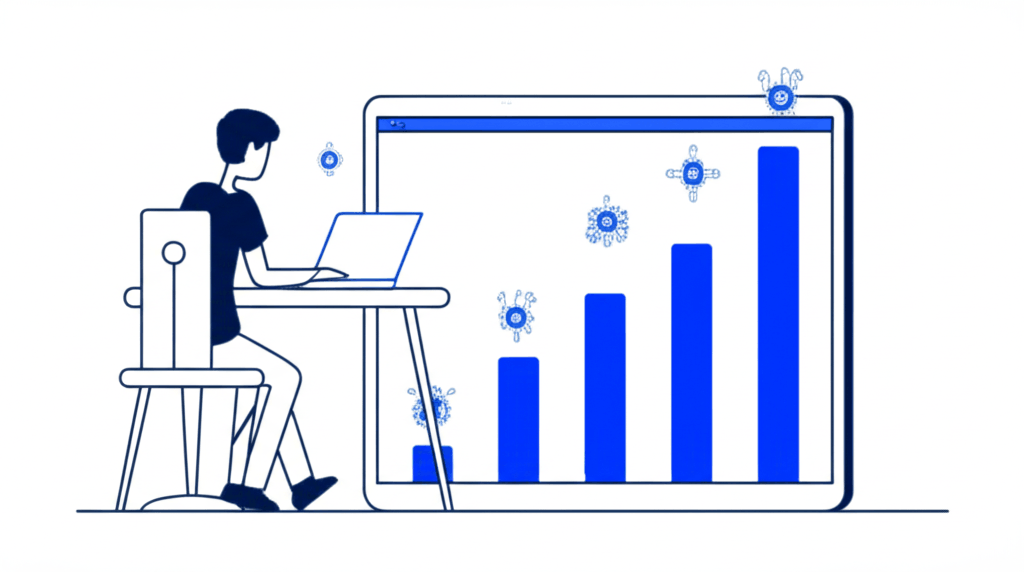
Not all AI platforms treat content the same way. Superlines analyzed 34,234 AI responses in early 2026 and found that citation rates vary by a factor of 46 across platforms.
| Platform | Citation rate | Brand visibility |
|---|---|---|
| Grok | 27.01% | 8.47% |
| Perplexity | 13.05% | 0.64% |
| Google AI Mode | 9.09% | 2.14% |
| Gemini | 6.38% | 0.00% |
| Google AI Overview | 2.11% | 2.28% |
| Copilot | 1.27% | 1.10% |
| ChatGPT | 0.59% | 0.14% |
ChatGPT has the lowest citation rate at 0.59% despite driving 87.4% of all AI referral traffic (Conductor 2026 benchmarks). Perplexity cites sources 22x more often. This gap means a GEO strategy that performs well on Perplexity (where detailed source attribution matters) may behave differently on ChatGPT (where brand familiarity from training data plays a larger role).
Superlines also found that brands are 6.5x more likely to be cited through third-party mentions — news articles, Reddit posts, reviews — than through their own domain. Reddit is the single most-cited domain across AI platforms (Superlines, March 2026). Earned media fuels AI visibility regardless of whether you frame your strategy as GEO, AEO, or LLMO.
There is also a gap between AI Overviews and conversational AI when it comes to source selection. Squid Impact data shows that 99% of Google AI Overviews cite pages from the organic top 10. But less than 10% of citations from ChatGPT, Gemini, and Copilot come from the Google top 10. This divergence means SEO directly supports AI Overview visibility (an AEO concern), while GEO and LLMO work is needed separately for conversational AI platforms.
A practical framework for unified optimization
Rather than running separate SEO, GEO, and AEO strategies, most teams benefit from a single content optimization workflow that covers all three. Here is a framework based on what the research says works.
1. Start with answer-first content
Every page should answer a clear question in its opening paragraph. This serves SEO (featured snippets), AEO (voice search extraction), and GEO (AI citation) simultaneously. The Princeton GEO study confirmed that answer-first structure is one of the strongest predictors of AI visibility.
2. Add verifiable data
Include statistics with named sources and links. This is the single highest-impact GEO and LLMO technique, boosting visibility by 30-40% according to Princeton. It also strengthens SEO (Google values E-E-A-T signals) and AEO (direct answers with data get selected more often for featured snippets).
3. Structure for extraction
Use H2 and H3 headings with descriptive text. Add comparison tables, bullet lists, and numbered steps. Pages with organized heading hierarchies are 2.8x more likely to earn AI citations, and 80% of AI-cited pages include list sections. This structure also improves traditional SEO through clearer content hierarchy.
4. Build entity signals
Use schema markup (Organization, Person, Product, FAQPage) to help both search engines and AI systems understand what your content is about. Content with schema markup has a 2.5x higher chance of appearing in AI-generated answers. Named authors with credentials and headshots improve E-E-A-T scores across all optimization types.
5. Maintain freshness
Update your most important pages every 60 days. SE Ranking found that recently updated content earns 5.0 average citations compared to 3.9 for content older than two years. Freshness signals matter for traditional Google rankings, AI Overviews, and conversational AI citations.
6. Measure across surfaces
Track more than organic traffic. Monitor AI referral traffic in your analytics (currently 1.08% of website traffic on average, growing ~1% month over month per Conductor). Test brand mentions manually across ChatGPT, Perplexity, and Gemini. Run periodic audits to identify gaps in citation readiness and schema coverage.
Which term is winning
If you need to pick one label for your AI optimization work, here is how industry adoption breaks down in early 2026.
- SEO — universal, everyone knows it, not going anywhere
- GEO — rapidly becoming the standard for AI search optimization, backed by the Princeton paper and a projected $33.7 billion market
- AEO — established, especially among voice search and featured snippet specialists
- AIO — growing as an umbrella term, popular with agencies packaging AI services
- LLMO — recognized in technical and engineering circles, 5,000%+ Google Trends growth
- SEvO — emerging in agency circles, strongest among e-commerce and multi-platform brands
- GAIO — minimal adoption, unlikely to gain traction
GEO is winning the naming race. The combination of academic credibility, venture capital attention (a16z’s “GEO over SEO” thesis), and practitioner adoption has given it the strongest position. That said, the term you use internally matters far less than the work you do.
Why the terminology debate is a distraction
We have seen teams spend hours debating whether to call their AI optimization work “GEO” or “AEO” or “LLMO.” That time would be better spent actually optimizing content. Seer Interactive put it well: “Marketing investment has never been an either/or conversation. It’s always been a calibration conversation.”
Structure your content with clear headings. Include verifiable statistics with named sources. Build author authority with credentials and schema markup. Keep content fresh. Make it easy for any system — human or AI — to extract a clear answer from your page. These practices work for SEO, GEO, AEO, LLMO, and every other acronym in the list.
If your team calls it GEO, call it GEO. If your client prefers AEO, use AEO. The work — and the results — will be identical. Run a 25-factor GEO audit to see where your content stands today, regardless of the label.
Run your free GEO audit at bluejar.ai to see how your site scores for AI visibility across schema, E-E-A-T, citation readiness, content structure, and technical SEO.
Frequently Asked Questions
Is GEO replacing SEO?
No. GEO builds on SEO rather than replacing it. SE Ranking found that domain traffic is the strongest predictor of AI citations with a SHAP value of 0.63, meaning the SEO work that drives your organic traffic also fuels your AI visibility. GEO adds a citation-focused optimization layer on top of your existing search strategy.
What is the difference between AEO and GEO?
AEO (Answer Engine Optimization) focuses on appearing as a direct, short answer in featured snippets, knowledge panels, and voice search results. GEO (Generative Engine Optimization) focuses on being cited within longer, AI-generated narratives from platforms like ChatGPT, Perplexity, and Google AI Overviews. The techniques overlap significantly, but AEO targets structured answer extraction while GEO targets citation within synthesized content.
Is LLMO the same as GEO?
In practice, yes. LLMO (Large Language Model Optimization) and GEO (Generative Engine Optimization) describe the same work from different perspectives. GEO comes from search marketing, LLMO from AI engineering. The techniques — structured headings, sourced statistics, schema markup, answer-first formatting — are identical.
Do I need separate strategies for SEO, GEO, and AEO?
No. These strategies share a common foundation: quality content, technical SEO, structured data, and author authority. Start with solid SEO, then layer on GEO-specific optimizations like statistical citations, comparison tables, and FAQ sections. One well-executed strategy covers all three.
Which AI platform should I optimize for first?
Optimize for citation readiness broadly rather than for one platform. Perplexity has the highest citation rate among popular platforms (13.05%), but ChatGPT drives 87.4% of AI referral traffic despite citing sources only 0.59% of the time. Writing structured, well-sourced content performs well across all platforms. Use BlueJar’s GEO audit to identify specific gaps.
What does AIO stand for in marketing?
AIO stands for AI Optimization (or Artificial Intelligence Optimization). It is an umbrella term for GEO, AEO, LLMO, and other AI-focused strategies. Some practitioners also use “AIO” to mean AI Overview Optimization, referring specifically to Google’s AI Overviews. The dual meaning creates occasional confusion.
What is SEvO and should I care about it?
SEvO (Search Everywhere Optimization) covers visibility across Google, TikTok, YouTube, Amazon, Reddit, LinkedIn, and AI chatbots. If your customers discover products on multiple platforms beyond Google, SEvO is a useful framework. E-commerce brands benefit most, since product discovery now spans search, social, marketplaces, and AI shopping agents.